Mathematics
10 Common Maths Mistakes Students Make and How to Avoid Them
BAMIDELE, KAYODE · 2 September 2026
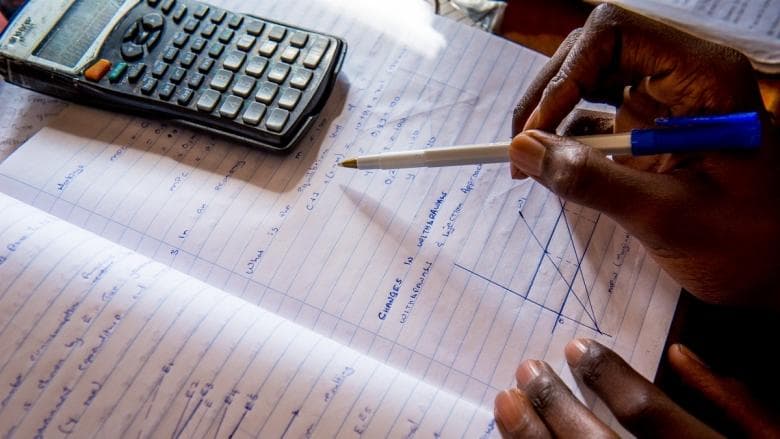
Mathematics is not always difficult because the topic itself is complicated.
Sometimes, a student understands the concept but loses marks because of a small mistake.
A missed negative sign, a rushed calculation, an incorrectly copied number or skipping an important step can completely change an answer.
The good news is that many of these mistakes can be avoided.
Here are 10 common maths mistakes students make and practical ways to reduce them.
1. Rushing Through the Question
One of the most common mistakes in mathematics is simply moving too quickly.
A student may read a question, immediately start calculating and miss an important piece of information.
How to avoid it
Before calculating, read the question carefully.
Ask yourself:
* What information has been given? * What am I being asked to find? * Which mathematical method might be useful?
Taking a few extra seconds to understand the question can prevent unnecessary errors.
---
2. Ignoring the Working
Some students focus entirely on getting the final answer.
For example:
2.5 × 4 = 10
The answer is correct, but understanding how the answer was obtained is also important.
You could think of multiplication as repeated addition:
2.5 + 2.5 + 2.5 + 2.5 = 10
The goal is not simply to remember that the answer is 10.
The goal is to understand the mathematical process.
When you understand the method, you can apply it to other questions.
---
3. Losing a Negative Sign
Negative signs can easily be overlooked.
For example:
7 − (−3)
The correct calculation is:
7 + 3 = 10
A student who misses the second negative sign may produce a completely different answer.
How to avoid it
When working with negative numbers, slow down and write each operation clearly.
---
4. Copying the Question Incorrectly
Sometimes the mistake happens before the calculation even begins.
A student might copy:
3x + 5 = 20
as:
3x − 5 = 20
The method may be correct, but the starting equation is wrong.
How to avoid it
If you are working from a question on a board, textbook or screen, check the numbers and symbols before beginning.
---
5. Forgetting the Order of Operations
Consider:
2 + 3 × 4
You should perform the multiplication before the addition:
3 × 4 = 12
Then:
2 + 12 = 14
The answer is therefore:
14
not 20.
Understanding the order in which operations should be performed is essential.
---
6. Skipping Steps
When a calculation looks easy, students sometimes perform several operations mentally and write only the final answer.
This can make it harder to identify where an error occurred.
Writing your working gives you something to check.
It also makes it easier for a teacher to understand your reasoning.
---
7. Not Checking the Final Answer
Finishing a question doesn't always mean you're finished.
Take a few seconds to check your answer.
Ask:
Does the answer make sense?
For example, if you are calculating the number of students in a classroom and your calculation produces a negative number, something has probably gone wrong.
---
8. Memorising Without Understanding
Memorising formulas and procedures can be useful, but mathematics becomes much easier when you understand what the formula or method means.
Instead of only memorising a procedure, try to understand why it works.
That understanding can help when you encounter a question that looks different from the examples you have studied.
---
9. Not Practising Different Types of Questions
Doing the same type of question repeatedly can make you comfortable with one particular pattern.
But examinations can present familiar ideas in unfamiliar ways.
Practising different forms of questions can help you become more flexible in your problem solving.
---
10. Giving Up Too Quickly
A difficult maths question doesn't always mean you cannot solve it.
Sometimes you simply need to break the problem into smaller steps.
Try asking:
What do I know?
What do I need to find?
What can I calculate first?
Breaking a problem down can make it much easier to approach.
---
How Can You Improve Your Maths?
Improving in mathematics is not only about doing more questions.
It is also about learning from your mistakes.
When you make an error, don't simply erase it and move on.
Ask:
Where did I go wrong?
Was it:
* Reading the question? * Choosing the method? * Making a calculation error? * Forgetting a sign? * Skipping a step?
Identifying the type of mistake can help you avoid repeating it.
Use Step-by-Step Explanations
When you are stuck on a maths problem, seeing the final answer alone may not tell you what went wrong.
A step-by-step solution can help you follow the reasoning from the question to the answer.
Neslern's AI Maths Tutor can be used to work through mathematics questions step by step.
Instead of only asking, "What is the answer?", try asking yourself:
"Do I understand how we got there?"
That change in mindset can make mathematics more meaningful.
Final Thought
Making mistakes is part of learning mathematics.
The important thing is to learn from them.
Read carefully. Write your working. Check your calculations. Understand the method. And practise different types of questions.
Don't just chase the answer.
Understand the mathematics behind it.
Try Neslern
Stuck on a mathematics question?
Explore Neslern and work through maths solutions step by step.
Visit neslern.com to learn more.
Frequently Asked Questions
What are the most common maths mistakes students make?
Common mistakes include rushing through questions, losing negative signs, copying numbers incorrectly, skipping working, forgetting the order of operations and failing to check answers.
How can I stop making careless mistakes in maths?
Read questions carefully, slow down your calculations, write your working clearly and check your answer before moving to the next question.
Is showing working important in mathematics?
Yes. Showing your working can make your reasoning clearer and can help you identify where an error occurred.
How can I get better at mathematics?
Regular practice, understanding mathematical methods, reviewing mistakes and practising different types of questions can help you improve.
Can AI help me learn mathematics?
AI tools can provide mathematical explanations and step-by-step solutions. Students should use these explanations as a learning aid and make sure they understand the method rather than simply copying the final answer.
Log in to react to this post.
Stuck on a maths question right now?
Neslern solves it step by step, written the way a real maths teacher would explain it — free to start, no card required.
Related articles

How to Stop Making Careless Mistakes in Mathematics