AI & Education
AI Maths Tutor vs Traditional Maths Practice: How Students Can Use Both
BAMIDELE, KAYODE · 24 September 2026
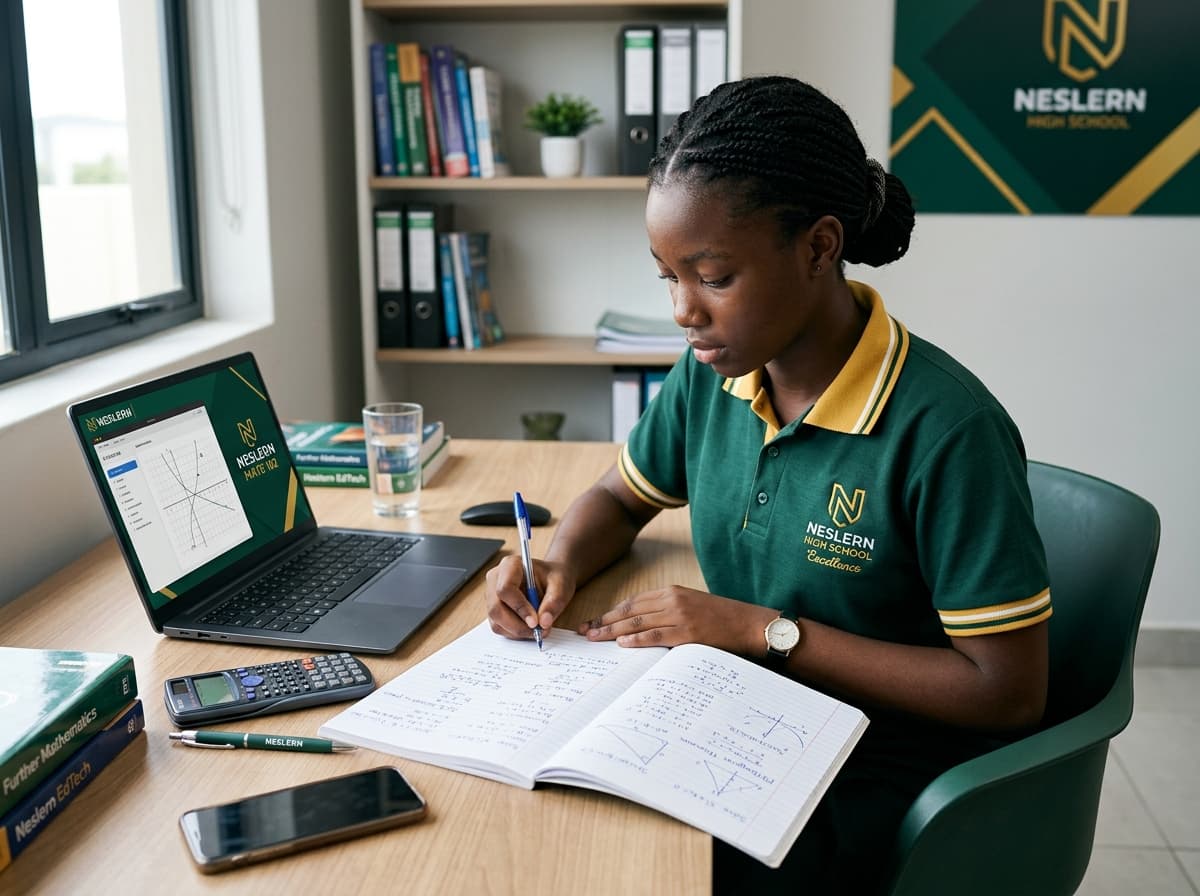
Mathematics is not a subject you master simply by reading an answer.
To become better at maths, students need to understand concepts, practise solving problems, make mistakes, learn from those mistakes, and try again.
Today, students also have access to a new learning resource: the AI Maths Tutor.
An AI Maths Tutor can provide explanations, work through questions step by step and give students additional support when they are practising.
But does that mean traditional maths practice is no longer important?
No.
The most useful approach is not necessarily AI versus traditional learning.
Instead, students can learn to use AI tutoring, independent practice and teacher guidance together.
The key is understanding what each one can contribute to the learning process.
What Is an AI Maths Tutor?
An AI Maths Tutor is a technology-based learning tool designed to help students with mathematics questions and concepts.
Depending on the platform, it can help students work through mathematical problems, explain steps and provide additional opportunities for practice.
For example, imagine a student is given:
2x + 6 = 14
A student who only wants the answer might search for:
x = 4
But knowing that x = 4 is not necessarily the same as understanding how to solve the equation.
A step-by-step explanation could show:
2x + 6 = 14
Subtract 6 from both sides:
2x = 8
Divide both sides by 2:
x = 4
The student can then see the reasoning behind the answer.
That distinction is important.
The goal should not simply be:
"What is the answer?"
It should also be:
"How did we get the answer?"
What Traditional Maths Practice Gives Students
Before AI became part of education, students were already learning mathematics through several methods:
Classroom teaching Textbooks Exercise books Homework Past examination questions Worksheets Revision Peer discussions Private tutoring Independent practice
These methods remain important.
1. Independent thinking
When students attempt a question themselves, they have to think about what they know and what method might work.
That process is part of learning.
If a student immediately looks at a solution every time they see a difficult question, they may miss the opportunity to develop their own problem-solving skills.
2. Practice
Mathematics requires practice.
A student may understand a concept when a teacher explains it but still struggle when faced with a slightly different question.
Practice helps students become familiar with different forms of mathematical problems.
For example, knowing how to solve one linear equation does not automatically mean a student will be comfortable solving every linear equation.
Students need opportunities to practise.
3. Learning from mistakes
Mistakes are a normal part of mathematics learning.
A student might:
Use the wrong formula Misread a question Make an arithmetic error Forget a negative sign Substitute incorrectly Skip a step Apply the wrong method
Simply marking the answer wrong doesn't always tell the student what went wrong.
The important question is:
Where did the mistake happen?
Understanding the mistake can help the student avoid repeating it.
Where Can an AI Maths Tutor Provide Additional Support?
AI can provide another layer of support when students are practising.
For example, imagine a student is working on a question at home.
They attempt it.
They get stuck.
The teacher isn't immediately available.
Instead of simply giving up, the student can use an AI Maths Tutor to study an explanation and identify the next step.
The process could look like this:
Attempt → Get stuck → Study the explanation → Understand the method → Try again
This can make technology part of the learning process rather than simply an answer-generating tool.
Why Step-by-Step Solutions Matter
Suppose a student sees:
Answer: 60 cm²
That tells the student the result.
But consider:
Length = 12 cm
Width = 5 cm
Area = length × width
Area = 12 × 5
Area = 60 cm²
Now the student can see the method.
This is particularly useful when the student doesn't understand why a particular formula or operation was used.
Step-by-step working can help students connect:
Question → Information → Method → Calculation → Answer
That is an important part of mathematical problem solving.
Students Should Still Attempt Questions Themselves
One of the biggest mistakes students can make with AI is using it before they have even tried to solve the problem.
Imagine a student receives a homework question.
Instead of reading it, thinking about it and attempting it, the student immediately asks AI for the answer.
They may finish the homework.
But did they learn how to solve the problem?
Not necessarily.
A better approach is:
Step 1: Read the question
Understand exactly what the question is asking.
Step 2: Identify what you know
Write down the information provided.
Step 3: Identify what you need to find
What is the question asking you to calculate?
Step 4: Choose a method
Think about the formula, rule or mathematical process that may apply.
Step 5: Attempt the question
Work through it yourself.
Step 6: Get help if you are stuck
This is where an AI Maths Tutor, teacher, textbook or another learning resource can become useful.
Step 7: Study the explanation
Don't just look at the final answer.
Understand the steps.
Step 8: Try again
Close the solution and attempt a similar question yourself.
This final step is extremely important.
What About Teachers?
Technology does not remove the importance of teachers.
A teacher can do things that are central to education: observe students, ask questions, identify misunderstandings, provide context, encourage students and adapt explanations to the needs of the class.
A teacher might look at a student's working and ask:
"Why did you use this formula?"
Or:
"What does this number represent?"
Or:
"Can you explain this step in your own words?"
Those questions can reveal whether the student actually understands the mathematics.
AI can provide additional learning support, but teacher guidance remains an important part of education.
Use AI to Understand Mistakes
One useful way to use an AI Maths Tutor is to examine mistakes.
Suppose a student calculates:
3x + 5 = 20
They write:
3x = 25
That is incorrect.
Instead of simply replacing it with the correct answer, the student should ask:
"Where did I go wrong?"
The correct first step is to subtract 5 from both sides:
3x + 5 - 5 = 20 - 5
Therefore:
3x = 15
Then:
x = 5
The important lesson isn't just that the answer is 5.
It is understanding why 5 was subtracted from both sides and how the equation was transformed.
That understanding can help the student solve similar questions later.
Use AI for Additional Practice
AI can also be useful when students want more practice.
For example, after learning how to solve:
2x + 6 = 14
a student shouldn't stop after understanding the example.
They could practise another question such as:
3x + 4 = 19
or:
5x - 7 = 18
The objective is to see whether they can apply the method independently.
This changes AI from something that simply produces answers into a tool that can support practice.
AI Should Support Learning — Not Replace It
The most important principle is simple:
Use AI as a learning tool, not a shortcut.
If students use AI only to complete assignments, they may become dependent on receiving solutions.
But if they use AI to:
Understand difficult concepts Study step-by-step working Identify mistakes Ask questions Practise different problems Review methods Try questions independently
then AI can become part of a broader learning process.
The technology becomes more useful when the student remains actively involved.
AI Maths Tutor vs Traditional Practice
It is useful to think about the two approaches this way:
Traditional Maths Practice AI Maths Tutor Encourages independent problem solving Can provide additional explanations Builds practice through repeated questions Can provide step-by-step support Uses textbooks, worksheets and past questions Provides technology-based assistance Helps students develop persistence Can help students when they get stuck Teacher can guide learning Can provide additional support outside direct teaching Students work through problems themselves Students can study explanations and methods
The two approaches don't have to compete.
They can work together.
A Practical Study Routine for Students
Students can create a simple routine that combines independent practice, technology and teacher support.
Before using AI
Try the question yourself.
Read it carefully.
Identify what is given.
Identify what you need to find.
Choose a method.
Start working.
When you get stuck
Don't immediately give up.
First ask:
What do I already understand?
Then identify the exact step causing the problem.
You can then use your learning resources for help.
When you receive an explanation
Don't simply copy it.
Read each step.
Ask yourself:
Why was this step necessary?
Why was this formula used?
Where did this number come from?
After studying the solution
Try another question without looking at the explanation.
This is where you find out whether you actually understood the method.
If you're still confused
Ask your teacher.
A good learning process is not about avoiding help.
It is about using help effectively.
How Neslern Fits Into This Approach
Neslern is an AI-powered maths tutoring platform designed around step-by-step mathematics.
Its approach focuses on showing students the working behind a solution rather than simply presenting a final answer.
Students can use Neslern to work through mathematics questions and study the steps involved.
Neslern also provides practice by topic, allowing students to select their class/topic and work through relevant examples.
The platform is designed for students working toward WAEC, NECO, JAMB and O-Level/IGCSE mathematics.
Neslern's teaching staff also review popular questions, correct answers where necessary, and add methods and voice notes.
This means the objective is not simply:
Get answer → Move on.
The learning process should be closer to:
Attempt → Understand → Practise → Check → Improve.
A Simple AI + Maths Practice Workflow
Students can remember this seven-step process:
1. ATTEMPT
Try the question yourself.
2. IDENTIFY
Work out what information you have and what you need to find.
3. ASK
If you're stuck, use an appropriate learning resource.
4. UNDERSTAND
Study the explanation and working.
5. CHECK
Compare your method with the explanation.
6. PRACTISE
Try another question.
7. APPLY
Use the method independently.
This keeps the student at the center of the learning process.
What Parents Can Encourage
Parents don't necessarily need to become mathematics teachers to support effective use of AI.
They can simply ask questions such as:
"What did you learn?"
"Can you explain how you got the answer?"
"What mistake did you make?"
"Can you solve another one without looking at the solution?"
These questions encourage understanding rather than answer collection.
Instead of asking only:
"Did you get the answer?"
try asking:
"Can you explain how you got it?"
That small change can encourage better learning habits.
What Teachers Can Encourage
Teachers can also help students develop responsible AI habits.
For example, students can be encouraged to:
Attempt questions before seeking help Study explanations carefully Identify mistakes Ask questions about unclear steps Practise independently afterward Discuss difficult concepts with their teacher Avoid simply copying AI-generated answers
The goal isn't to prevent students from using technology.
It is to help them use technology intelligently.

Final Thoughts
The question shouldn't be:
"AI or traditional maths practice?"
A better question is:
"How can students use both effectively?"
Students still need to think.
They still need to practise.
They still need to make mistakes.
They still need to understand mathematical methods.
And they still benefit from teachers.
AI can provide another useful layer of support by helping students work through questions, study explanations and practise concepts.
The key is how the technology is used.
Don't use AI simply to get the answer.
Use it to understand the answer.
Then close the solution, pick up your pen and try the next question yourself.
That is where learning happens.
Learn Mathematics Step by Step with Neslern
When you get stuck on a maths question, don't just look for the final answer.
Understand the problem.
Study the working.
Learn the method.
Then try it yourself.
Use technology to support your learning, but keep understanding at the center.
👉 Explore Neslern at neslern.com
Neslern — Your AI Maths Tutor.
Log in to react to this post.
Frequently asked questions
Stuck on a maths question right now?
Neslern solves it step by step, written the way a real maths teacher would explain it — free to start, no card required.